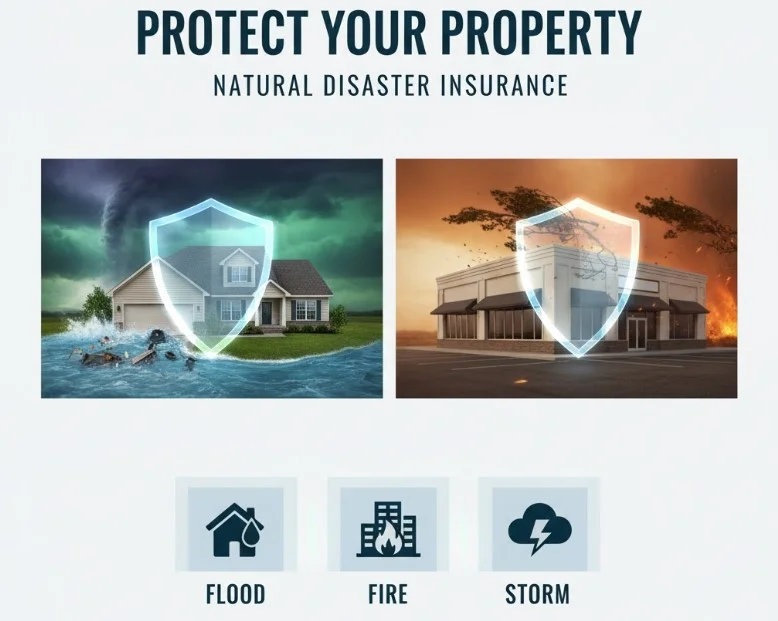
The threat of a natural disaster looms larger than ever, making it critical for property owners to secure the right Types of Insurance Coverage to Protect Your Property from Natural Disasters.
It’s a sobering reality: a standard homeowners insurance policy is an absolute necessity, but it is often not enough to cover the immense, unpredictable damage wrought by nature’s most powerful forces.
Truly protecting your most valuable asset (your home or business) requires a deeper understanding of the specific perils your standard policy excludes and the specialized coverage available to fill those dangerous gaps.
For savvy homeowners and business operators, knowing the nuances of what your policy covers is the difference between a swift, successful recovery and devastating financial ruin.
Securing adequate Types of Insurance Coverage to Protect Your Property from Natural Disasters involves assessing your location-specific risks, from seismic activity and coastal storm surges to inland river flooding and intense straight-line winds, and then strategically purchasing the specialized policies or endorsements designed to mitigate those exact threats.
This comprehensive guide will meticulously break down the critical insurance types you need to safeguard your property and financial future against catastrophic natural events.
Standard Homeowners Insurance (HO-3/HO-5)
Standard homeowners insurance, often referred to as an HO-3 policy, is the financial backbone for most property owners. While it’s celebrated for its broad protection, it’s written using an “open perils” basis for the dwelling structure and an “named perils” basis for personal property.
This means the dwelling is covered for everything except what is specifically excluded, while personal belongings are only covered for the specific list of disasters mentioned in the policy.
The good news is that this foundation of coverage reliably protects your property from many common and costly weather-related events, making it a critical one of the Types of Insurance Coverage to Protect Your Property from Natural Disasters.
Here is an extensive breakdown of the natural disasters typically covered by standard homeowners insurance:
1. Fire and Wildfire Damage
This is the quintessential coverage provided by a homeowners policy. If your home is damaged or destroyed by a fire, the insurance is designed to cover the costs of repair or complete rebuilding.
- Standard House Fires: Coverage for fires caused by internal issues, like electrical shorts, kitchen accidents, or a lightning strike, is always included.
- Wildfire Protection: In most cases, fire damage caused by a spreading wildfire is also covered. This is immensely important in areas with high brush or forest exposure. However, it’s essential to note that in extremely high-risk wildfire zones, some carriers are now adding specific exclusions or making wildfire coverage harder to obtain, potentially requiring a specialized fire policy or a high-risk insurance pool.
2. Windstorm, Hail, and Tornado Damage
Wind and hail losses are among the most frequent and expensive claims filed by homeowners, and they are typically covered perils. This is a critical element of the Types of Insurance Coverage to Protect Your Property from Natural Disasters for central, southern, and coastal regions.
- Direct Wind Damage: This covers the physical impact of high winds tearing off shingles, ripping off siding, or blowing out windows.
- Tornadoes and Derechos: These severe wind events are covered under the standard “windstorm” peril. This includes damage from the extreme rotational winds and the resulting debris.
- Hail Impact: Damage to roofs, gutters, and siding from the impact of large hailstones is usually covered.
- Wind-Driven Rain/Snow: If wind first creates an opening in your home’s structure (like tearing off part of the roof) and rain or snow is then driven inside through that opening, the ensuing water damage to the interior and contents is generally covered.
The Hurricane Caveat: While hurricanes are fundamentally windstorms, properties in coastal, high-risk hurricane zones often have a separate, much higher percentage deductible that applies only to damage from a named hurricane or tropical storm, as defined by the policy.
3. Lightning Strikes and Electrical Surges
Lightning is a frequent and destructive natural force.
- Direct Hit: If lightning strikes your house, causing a fire, cracking the foundation, or damaging the chimney, the resulting structural damage is covered.
- Power Surge: Lightning can induce a massive power surge that travels through electrical lines and fries expensive electronics and appliances. Many standard policies offer protection against this “sudden and accidental damage from artificially generated electrical current,” though limits on high-value electronics may apply.
4. Weight of Ice, Snow, or Sleet
This coverage is vital in regions that experience severe winter weather. It addresses the potential for structural collapse due to excessive accumulation of winter precipitation.
- Roof Collapse: If the sheer, prolonged weight of heavy snow or ice causes your roof to buckle or collapse, the resulting damage is covered.
- Ice Damming (Indirectly): While standard policies generally exclude water damage from slow leaks, damage from ice dams is often considered part of this covered weight-of-ice peril, provided the damage is sudden and accidental.
5. Volcanic Eruption
While a rare event for most property owners, damage from volcanic eruptions is typically listed as a covered peril.
- Direct Damage: This includes damage from the shock waves, ash, and particles ejected from the volcano.
- Lava Flow and Magma: Direct damage from lava flow is generally covered.
A Critical Exclusion: Damage caused by earth movement (like an earthquake or landslide) that is caused by the volcanic eruption is often excluded, following the general rule for earth movement. For full coverage, a separate earthquake/earth movement policy may still be necessary.
6. Falling Objects
This peril provides protection against objects crashing into your home from above.
- Fallen Trees: The most common claim under this category. If a strong wind or storm causes a healthy tree to fall and damage your dwelling or a detached structure (like a fence or garage), the damage and the cost of tree debris removal are typically covered.
- Aircraft or Vehicle Impact: Damage caused by a vehicle (other than your own) or a plane colliding with your home is also listed as a covered peril.
The Defining Exclusion: What is NOT Covered
To fully understand the Types of Insurance Coverage to Protect Your Property from Natural Disasters offered by a standard policy, you must always circle back to the two primary exclusions that necessitate separate policies:
- Flood: Defined as external water entering the property from a natural source (e.g., river overflow, storm surge, flash floods). This requires a separate Flood Insurance policy.
- Earth Movement: Damage caused by the earth shifting, including earthquakes, landslides, mudflows, and sinkholes (outside of specific state laws). This requires a separate Earthquake Insurance policy or endorsement.
By understanding this scope, property owners can clearly see where their base protection lies and, more importantly, where they need to layer on specialized Types of Insurance Coverage to Protect Your Property from Natural Disasters to achieve true peace of mind.
Flood Insurance
If there is one non-negotiable component of a robust strategy for Types of Insurance Coverage to Protect Your Property from Natural Disasters, it is flood insurance.
Flooding is the most common and costly natural disaster worldwide, yet it is almost universally excluded from standard homeowners policies.
Many property owners incorrectly assume their standard coverage or even general disaster relief funds will protect them from rising waters, a misconception that leads to catastrophic financial loss.
Key Types of Flood Insurance Coverage:
Homeowners, renters, and business owners can typically choose between a policy backed by the government or one offered by a private insurer.
1. Federal Flood Insurance (NFIP):
This is the most common way to secure coverage and is often required by lenders for properties in designated high-risk flood zones.
It offers coverage for the building structure and personal contents, though the limits and coverage for contents are often lower than a homeowner might need, and it typically uses Actual Cash Value (ACV) for contents, meaning depreciation is factored in.
A flood is defined as an excess of water on land that is normally dry, affecting two or more acres of land or two or more properties.
2. Private Flood Insurance:
Available through a growing number of private insurance carriers, these policies can often provide higher coverage limits for the dwelling and contents (sometimes Replacement Cost Value), shorter waiting periods, and even coverage for Additional Living Expenses (ALE), which National Flood Insurance Program (NFIP) policies may not include.
For properties that are not in a mapped flood zone (where nearly a third of all claims occur) private options can sometimes offer more flexible and cost-effective solutions.
Why It’s Essential: Water from an external source (such as overflowing rivers, flash floods from heavy rains, or storm surges from a coastal hurricane) is the definition of a flood and is what this specific policy covers.
Waiting periods typically apply, so you must secure this protection long before a weather event is on the horizon.
Earthquake and Earth Movement Insurance
Earthquake insurance is a specialized form of property coverage that is crucial because standard homeowners, renters, and business insurance policies generally exclude damage caused by earth movement. This coverage must be purchased as a separate policy or an endorsement added to a property policy.
Key Features of Earthquake Coverage:
The key features of earthquake coverage include:
1. Structural Protection (Dwelling Coverage)
This is the core of the policy, paying to repair or rebuild the physical structure of your home, including the foundation, walls, roof, and any structures attached to the house, such as an attached garage.
The coverage limit is typically set to match the estimated cost to rebuild your home, not its market value. Some policies may also cover detached structures like sheds or fences, but this is a common point of variation.
2. Personal Property Coverage
This component covers the cost to repair or replace your personal belongings that are damaged or destroyed in an earthquake, such as furniture, electronics, appliances, and clothing. It is important to note that many policies have lower sub-limits for certain high-value items like computers or valuable collections.
3. Additional Living Expenses (ALE)
Often referred to as Loss of Use coverage, ALE is a vital feature that pays for the necessary extra costs you incur if earthquake damage makes your home uninhabitable.
This can include temporary housing (hotel or rental), restaurant meals, and other essential services until your home is repaired or permanently relocated. Unlike other parts of the policy, ALE coverage often has no deductible.
4. High Deductibles (Percentage-Based)
A distinct feature of earthquake insurance is the deductible structure. Unlike the flat-dollar amount deductible common in homeowners insurance (e.g., $1,000), earthquake policies use a percentage deductible that is calculated based on the dwelling’s total insured value, not the amount of the loss.
These percentages are substantial, typically ranging from 10% to 20% of the home’s coverage limit, which means the homeowner is responsible for a significant out-of-pocket cost before the insurance payout begins.
5. Common Exclusions
While it covers damage from the shaking of the earth, earthquake insurance generally does not cover secondary damage from other natural disasters that an earthquake may trigger, such as:
- Fire: Fire damage, even if caused by ruptured gas lines from the quake, is typically covered by your standard homeowners policy, not the earthquake policy.
- Water Damage: Flooding or a tsunami resulting from an earthquake requires a separate flood insurance policy.
- Landslide or Mudflow: These are often separate types of “earth movement” and may require a separate policy or endorsement.
- Vehicles: Damage to cars is covered by the comprehensive portion of an auto insurance policy.
6. Single Event Rule
In the event of an earthquake, all subsequent aftershocks occurring within a specific timeframe—often 72 hours—are usually grouped together and considered a single event with one combined deductible applied. This prevents the homeowner from having to pay a new, high deductible for every aftershock.
Dedicated Windstorm and Hurricane Coverage
While standard homeowners policies usually cover wind and hail, properties in coastal zones or areas frequently hit by tropical storms and hurricanes may face special restrictions.
Insurers in these high-risk areas often use very high percentage deductibles specifically for wind and hurricane claims, or they may exclude wind damage entirely, forcing property owners to seek a dedicated policy.
Key Coverage Elements:
The key coverage elements are:
1. Structural Damage (Dwelling)
This is the most critical component, covering the cost to repair or rebuild the physical structure of your home, including the roof, exterior walls, and foundation, when damaged by hurricane-force winds or hail. This coverage is triggered by damage from the actual wind force or by flying debris propelled by the wind.
2. Interior and Content Damage
The policy will cover interior damage to your walls, floors, and ceiling, as well as damage to your personal property (furniture, electronics, clothing) inside the home. This coverage usually kicks in only if the high winds first create a breach in the exterior of the structure—such as a hole in the roof or a broken window—that allows wind-driven rain to enter and cause damage.
3. Additional Living Expenses (ALE)
This provides financial assistance if windstorm or hurricane damage makes your home uninhabitable. It pays for necessary increased expenses, such as the cost of temporary housing (like a hotel or rental), food, and other essential services while your property is being repaired or rebuilt.
4. High, Percentage-Based Deductibles
A hallmark of this coverage is the use of a separate, high deductible that only applies to named storms or wind events. This is typically a percentage of the home’s dwelling coverage limit (often 1% to 5%), not a flat-dollar amount.
For example, a 2% hurricane deductible on a $400,000 home means the homeowner is responsible for the first $8,000 of the loss. These deductibles can be triggered in a few ways:
- Hurricane Deductible: Applies only to storms officially declared as hurricanes by an authority like the National Weather Service.
- Named Storm Deductible: Applies to any storm that has been given an official name, including tropical storms.
- Wind/Hail Deductible: The broadest of the three, applying to any loss caused by wind or hail, regardless of whether a storm was named.
5. Exclusion of Flood Damage
A crucial distinction in this coverage is the exclusion of flood damage. While hurricane and windstorm policies cover damage caused by the high wind, they do not cover damage caused by rising water, such as storm surge or heavy rainfall flooding the ground level.
Coverage for this type of water damage requires a separate Flood Insurance policy, often acquired through the National Flood Insurance Program (NFIP).
6. Single Event Rule
Policies often specify that all damage occurring from the time a hurricane watch or warning is issued until a specified time after it ends is considered a single event, subject to one application of the deductible. This prevents a homeowner from having to pay a deductible for every minor wind gust or after-storm event.
Secondary, Yet Essential, Coverage Options
To create truly comprehensive Types of Insurance Coverage to Protect Your Property from Natural Disasters, homeowners should explore several critical endorsements or supplemental coverages that work in concert with the primary policies.
1. Extended Replacement Cost and Guaranteed Replacement Cost
After a major natural disaster, local construction costs often spike dramatically due to high demand for materials and labor. If your policy only covers your home’s estimated value (Replacement Cost Value or RCV), you could find yourself underinsured.
- Extended Replacement Cost: This endorsement provides an extra cushion, typically an additional 20% to 50% above your policy’s stated dwelling limit, to account for unexpected post-disaster construction inflation.
- Guaranteed Replacement Cost: The gold standard, this coverage pays the actual cost to rebuild your home exactly as it was, even if that cost exceeds your policy limit. This is a powerful safeguard against severe underinsurance following a widespread disaster.
2. Additional Living Expenses (ALE) or Loss of Use
If a natural disaster—like a covered fire, windstorm, or even a specialized covered peril like a flood or earthquake—forces you to leave your property during repair or rebuilding, ALE coverage pays for your temporary expenses.
This can include hotel stays, apartment rent, food costs above your normal budget, and laundry fees. This coverage is absolutely vital, as being displaced from your home can be a huge financial burden in the immediate aftermath of a disaster.
3. Sewer Backup Coverage
Heavy rain or rapid snowmelt, often associated with a natural disaster, can overwhelm municipal sewage systems or a home’s drainage.
Water and sewage backing up through drains and toilets is not covered by a standard homeowners policy, and NFIP flood insurance only covers it if the backup is a direct result of the external flooding. A simple, low-cost sewer backup endorsement can cover this specific, messy, and costly type of water damage.
4. Ordinance or Law Coverage
Following a major disaster, local building codes may have been updated, meaning that when you rebuild, you may be required to meet newer, more stringent codes.
Your existing policy may only pay to rebuild your home as it was, not as it must be. Ordinance or Law coverage pays the increased cost of construction necessary to comply with new building codes or local ordinances.
The Proactive Path to Protection: Assessing and Acting
The Proactive Path to Protection involves a deliberate, two-step process: assessing your specific risk profile and then taking action to mitigate those risks through both preparation and specialized insurance coverage. This approach moves beyond simply buying a policy and focuses on comprehensive resilience.
Determine Your Specific Risk Profile
Before purchasing any policy, a homeowner must determine their specific risk profile by evaluating their property’s vulnerability to natural disasters.
This involves looking beyond general regional risk to analyze factors unique to the property, such as its proximity to a coast or fault line, the type of soil it sits on (e.g., liquefaction risk for earthquakes), and its construction style (e.g., wooden frame vs. unreinforced masonry).
An accurate assessment helps you understand not just if you need coverage, but how much and for which specific perils, ensuring you don’t overpay for unnecessary coverage or, critically, remain underinsured for the most probable catastrophic threat.
Review Standard Policy Exclusions
A crucial step in the proactive path is to review standard policy exclusions in your basic homeowners or business insurance. Most standard policies explicitly exclude damage from floods, earth movement (earthquakes, landslides), and in high-risk zones, wind and hail (hurricane or named storm damage).
Identifying these gaps is the foundation for securing proper protection, as it determines which dedicated, specialized policies (such as a separate flood policy or a wind/hurricane endorsement) you must purchase to achieve comprehensive protection against all relevant local hazards.
Conduct a Home Mitigation Audit
Proactive protection requires a home mitigation audit to identify and implement structural improvements that reduce the severity of potential damage. For windstorms, this involves securing the roof with hurricane clips, installing storm shutters, or reinforcing garage doors.
For earthquakes, this means bolting the house to its foundation (a process called retrofitting) and securing heavy furniture. These actions not only lower the probability of catastrophic loss but can also qualify you for valuable insurance premium discounts, making coverage more affordable.
Select and Customize Specialized Coverage
The final step is to select and customize specialized coverage that directly addresses the identified exclusions and risks.
This means choosing the appropriate coverage limits for the dwelling and personal property, and most importantly, selecting a deductible you can realistically afford in a major disaster scenario.
Because hurricane and earthquake deductibles are often high, percentage-based amounts (e.g., 5-20% of the insured value), choosing a higher percentage can lower the premium, but selecting a lower one ensures you can access the funds needed for immediate recovery after a loss.
Conclusion
Property ownership in the modern era demands a vigilant and multi-layered approach to protection. Your standard homeowners policy is a necessary first line of defense, but true resilience against catastrophic events is achieved only by strategically layering on the specialized Types of Insurance Coverage to Protect Your Property from Natural Disasters (especially flood, earthquake, and supplemental replacement cost coverage) that are uniquely designed to withstand the full spectrum of nature’s power. Don’t wait for the unpredictable to strike; secure your comprehensive coverage today and ensure your peace of mind is as solid as your foundation.